
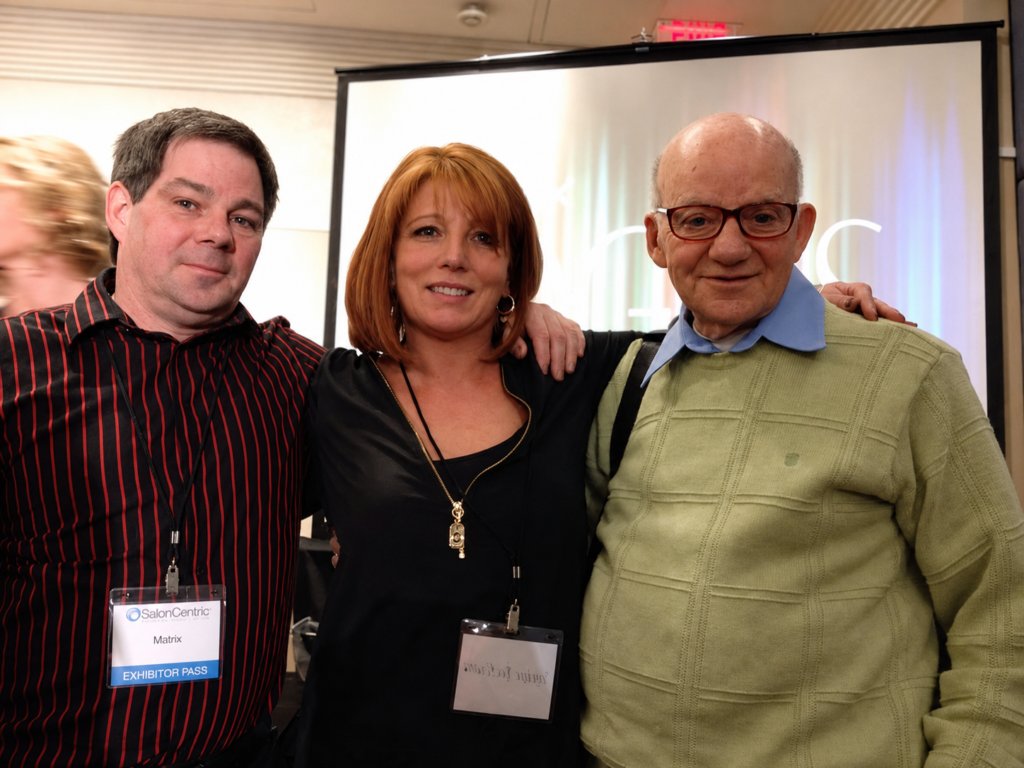
I have been blessed in a way that fewer and fewer people can say: I had all four of my grandparents alive and present well into my late twenties. I got to watch them age. I got to watch them navigate the slow, uneven, deeply human process of growing old, not as an abstraction, not as a statistic, but as four distinct people I loved, each finding their own way through it. That is a gift I don’t take for granted, and it’s the reason this project exists at all.
Residential Assisted Living comes from that gift. It is not a market analysis. It is not a franchise opportunity. It is a front-row seat to what it looks like when aging is handled with dignity, and a very personal understanding of what it costs a family when the systems around that process aren’t built for dignity at all.
Vanderburgh Sober Living taught me how to build something: how to equip operators, how to design an education model that turns a calling into a viable small business, how to create structure around a mission so it can actually scale and serve people well. RAL borrows that same operating skeleton. But the skeleton isn’t the point of this post. The heart is.
Four Grandparents, Four Journeys
Each of my grandparents aged differently. One held onto full independence almost to the very end. One needed more support far sooner than any of us expected. One found a kind of late-life joy that surprised everybody. One taught me the most about grace under difficulty. I carry a piece of each of them with me, but if I’m honest, it’s my grandfather Richard Foote whose story sits closest to my heart, and closest to why I do this work.
Richard was a hairstylist, not in the sense of a job he tolerated for forty years, but in the sense of a craft he loved, a stage he owned, and a community he built one appointment at a time. He founded Richard’s of Wellesley, in Wellesley, Massachusetts, and ran it for more than fifty years. Fifty years of small talk and big talk. Fifty years of remembering how someone likes their hair, and remembering what’s going on in their life too. He had impeccable timing, a quick wit, and by every account I’ve ever heard, the kind of personality that made a room lighter the moment he walked into it. He loved to travel. He loved his work. Mostly, he loved people, specifically, the person in front of him, by name.
You may notice our RAL Roadmap logo was inspired by the “R” from Richard’s of Wellesley.
As he got older, something in our family shifted. It wasn’t a single event. It was a slow unfolding, a question that kept reasking itself in new forms: what does it look like to help someone move from full independence into whatever comes next, without taking away the thing that made them who they were? For our family, that “whatever comes next” changed shape more than once, and each change asked something new of us. But the goal never moved. We were not trying to manage Richard. We were trying to protect his independence and his dignity for as long as we possibly could, in whatever form that needed to take.
That experience became, in hindsight, an education, and an emotional one at that. Not one I would have chosen, and not one I could have gotten from a textbook. It taught me that the hardest part of aging well isn’t medical. It’s relational. It’s the tension between wanting to be safe and wanting to be free, between needing care and needing to still be yourself. Watching someone you love move through that tension, and trying your best to walk alongside them without taking away their agency, is one of the more humbling things I’ve ever done.
Independence and Community Aren’t Opposites
We tend to talk about independence and community like they’re a trade-off, like the more supported someone is, the less free they must be. I don’t believe that, and neither does the research. Independence is core to human flourishing. So is belonging. The real question isn’t “which one do we sacrifice”; it’s “what environment lets someone hold both at once?”
That question is exactly what small-scale residential assisted living answers, in a way that large institutional care simply cannot. A big facility, however well-run, is built around efficiency at scale. A residential home, a handful of residents, a real caregiver who knows their names, their habits, their stories, is built around relationship instead. It gives people privacy without isolation. Support without surrender. A door they can close, and people on the other side of it who actually know them and are glad they’re there.
The Place Where They Know Your Name
Here is how I’ve come to think about it. Residential assisted living is the small coffee shop down the street, not the national chain on the highway.
At the small shop, the barista knows your order. They start making it when they see your car pull into the lot. They ask how the new job is going. You ask how their kids are doing. Some days the cup takes a little longer, because one of the baristas is out on maternity leave and they’re short-staffed. Some days the prices go up a little, because doing it right, using the good beans, paying people fairly, costs more than cutting corners does. But you go there every single day, and it feels like home, because it is home. You have a real connection to real people who are genuinely glad to see you.
That is what a well-run residential assisted living home should feel like for the people who live there. Not a facility. A home, with a familiar face who knows them, run by an owner-operator who feels personally, not just professionally, invested in their wellbeing.
What This Is Really About
More than anything, RAL exists because I believe the people who spent their lives building the world we live in, the Richard Footes of the world, the ones who ran the shop, raised the kids, showed up for fifty years, deserve to spend their final chapter with independence, privacy, safety, and dignity intact. Not warehoused. Not managed. Known, and loved, right up until the very end.
Vanderburgh gave me the model for how to equip someone to build that kind of home well. But the “why” came first, and it came from watching four people I loved grow old, and from one man in particular who spent fifty years making other people feel seen, and who, in his own later years, deserved nothing less in return.
That’s the debt this project is trying to repay. Not to Richard alone, but to everyone like him.
— Dr. Hunter Foote